Stone, block and brick that ties the yard together
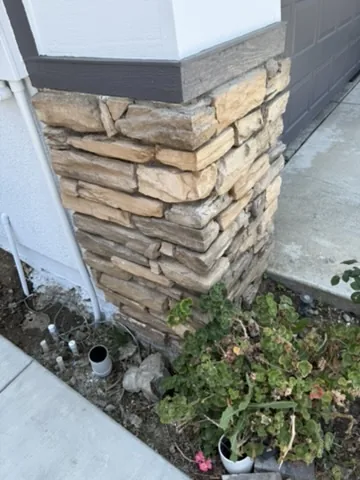
Veneer columns, seat walls, steps, planters and pilasters built on real footings, with the stone laid to a pattern rather than stuck on at random.
How we approach it
Footings first, always
Masonry is heavy and unforgiving. A column or a pilaster on an inadequate footing cracks at the joint within a couple of seasons. Everything we build starts below grade on compacted ground.
Stone laid to a pattern
Veneer that reads well has deliberate variation: joint width kept consistent, big pieces distributed rather than clustered, and no repeating run of the same shape. Getting that right is the difference between stonework and a stone-shaped surface.
Detailing at the edges
Caps, returns, corners and the junction where masonry meets stucco or concrete are where cheap work shows. Corners get proper corner units rather than a mitred cut that exposes the thin edge of the veneer.
The detail
What we build
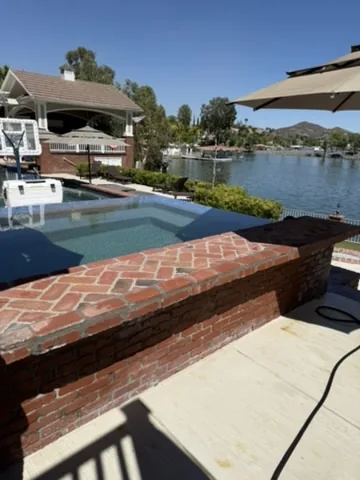
Entry columns and pilasters, seat walls and planters, steps and stair cheeks, veneer over block or poured walls, brick banding, mailbox surrounds and barbecue islands.
Materials
Natural stone veneer, manufactured stone, brick, CMU block with stucco, and precast caps.

What separates good stonework from stone-shaped surfaces
Veneer that looks right has a pattern behind it that most people never consciously notice: consistent joint widths, large and small pieces distributed evenly rather than clustered, no two identical shapes side by side, and no repeating run that the eye can pick up. Laying stone well is a slower, more deliberate process than covering the same area quickly, and the difference is visible from across the yard even to people who could not say why.
Corners and terminations are the other tell. Proper corner units wrap the edge so you never see the thin cut face of a veneer piece. A mitred corner on thin veneer reads as a facade the moment you look at it from an angle.
Footings, movement and why masonry cracks
Masonry is heavy and rigid. It does not tolerate the small ground movements that a timber or a segmental structure absorbs without complaint. That means everything starts below grade on compacted ground with a footing sized for the load, and it means control joints in long runs so seasonal movement has somewhere to go.
When we are asked to repair cracked masonry, the crack is a symptom. Repointing it without finding out whether the cause was an inadequate footing, a drainage problem washing out the ground beneath, or a tree root, just means the same crack reappears in the same place.
Where we do this work
We take masonry jobs across Orange County, including Anaheim · Irvine · Huntington Beach · Mission Viejo · Fullerton, and into Los Angeles County and San Bernardino County. The full list is on the service areas page.
Often booked alongside:
Call (909) 567-5653, see the gallery, or tell us what you are picturing.
What the work looks like on site
Footings are excavated below grade onto compacted ground and poured with reinforcement sized to what sits above. Nothing decorative starts until those have cured, because masonry set on a green or inadequate footing cracks at the first seasonal movement.
The structural core is built first, usually block, laid plumb and grouted where reinforcement runs through it. On a veneer job this is the stage that decides whether the finished faces are flat and the corners are square, and it is worth the time it takes.
Stone or brick is then laid to the face. We dry-lay a section first to set the pattern, distribute large and small pieces and avoid repeating shapes, then set it with the joint width kept consistent and corners wrapped with proper corner units. Joints are struck and cleaned before the mortar sets hard, caps are bedded, and the work is cleaned down.
After we finish
We walk the finished job with you before the final invoice rather than after it. Anything on the punch list gets cleared while the crew and the materials are still here, which is the cheapest and fastest time to deal with it.
You get whatever documentation the work generates: the plant list and irrigation schedule on a planting job, product details and warranty paperwork on turf, permit and inspection records where the work was permitted, and the specification of what went in the ground so a future contractor is not guessing.
Workmanship is warranted, and manufacturer warranties on materials such as turf and pavers pass to you. If something is not right, call us. We are a small local operation and our name is on work all over this county, which is a stronger incentive than any warranty document.
Questions about masonry
Natural stone or manufactured?
Manufactured veneer is lighter, more consistent and usually less expensive. Natural stone has depth and color variation that manufactured product approximates but does not match. Both work; it comes down to budget and how close people get to it.
Will the mortar color match my house?
Mortar is tinted and we mix to a sample. Color shifts slightly as it cures, so we build a sample panel and let it dry before committing on a large job.
Can you repair existing masonry?
Yes. Repointing, replacing spalled units and rebuilding a section that has moved are common. If the cause was a footing or a drainage problem, that gets fixed first or the repair fails again.
How long does veneer take to install?
Depends on the area and the detail. Columns and small features go quickly; a long wall face with a lot of corners and caps takes longer. We give you a schedule with the scope.
Does masonry need sealing?
Some stone benefits from it, particularly where it is exposed to sprinkler overspray. We will tell you whether the material you chose needs it.
Can you build a barbecue island?
Yes, framed and veneered to match the rest of the hardscape, with the gas and electrical sleeved before the surface goes on.
Can you build a mailbox or entry monument?
Yes. Entry monuments, mailbox surrounds and address pillars are common, and they get the same footing treatment as anything else we build.
How do you keep efflorescence off new masonry?
Efflorescence is salts migrating out as the masonry dries and it is common on new work. Correct drainage behind the wall reduces it, and it typically weathers off. We will tell you if it is a sign of a water problem rather than a normal curing effect.
Do you do stucco?
We stucco block work we have built, such as walls and pilasters, and color it to match. House stucco and remedial stucco repair on the structure itself belong with a plastering contractor.
Tell us what you are picturing
We will come out, walk the property with you and put a real scope together. No pressure attached to the visit.
Anaheim, CA. Locally owned. Financing available.
Have us walk it
Leave the town and what you are picturing. We call back and come out.