Planting a Yard for the Water Rules You Will Still Have in Ten Years
There is a way of planting a yard that assumes the water situation is a phase, and a way that assumes it is the weather. The first one produces a garden that looks generous for two years and then looks like it is being kept alive under protest. The second one produces something that gets better every season without a fight. In Aliso Viejo the second approach is the only one we think is honest.
The design question is not which plants, it is how many kinds of thirst
People usually start a planting conversation with a list of plants. We would rather start with a map of how much water different parts of the yard can realistically get, because that is what actually decides whether a design survives.
Almost every yard has zones that are genuinely different. There is the piece by the front door that people see every day and will forgive more attention. There is the working middle. There is the far edge, the strip along a fence, the awkward bit beside the side gate nobody walks past between April and October. Treating those as one watering problem is how the far edge dies while the front is overwatered.
Once you draw those zones honestly, plant selection gets easier rather than harder, because each zone has a shorter and more sensible list.
Grouping by water need is worth more than any individual plant choice
The single most common planting mistake we are called out to fix is a bed containing plants with genuinely different water requirements on one valve. Whatever schedule that valve runs is wrong for something in the bed. Either the thirsty plants are stressed or the drought-tolerant ones are sitting wet, and sitting wet kills more of them here than drought ever does.
Grouping plants by what they actually need lets each valve run a schedule that is right for everything on it. It is not a glamorous idea and it does not show up in photographs, but it is the difference between a bed that fills in and a bed you keep replacing pieces of.
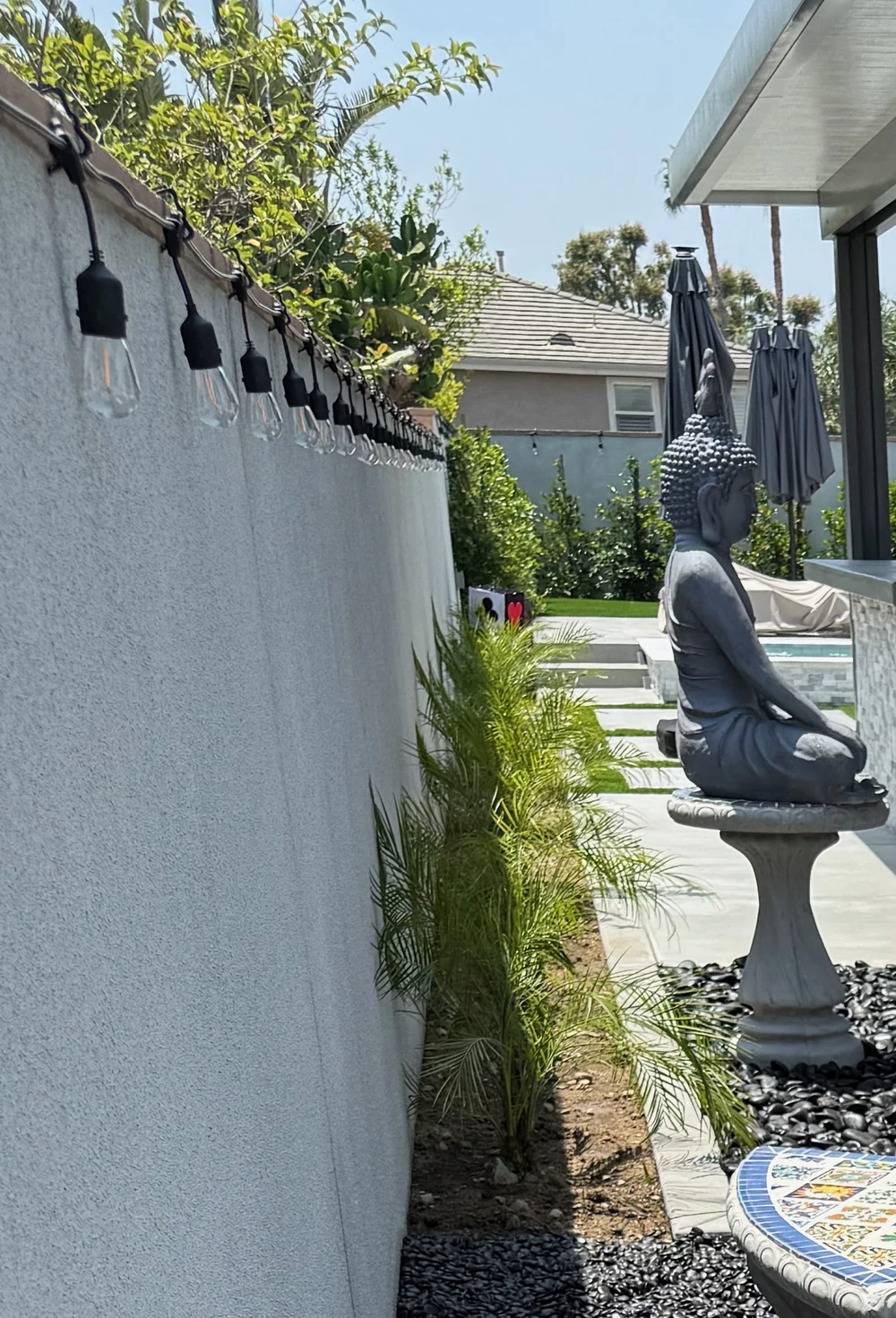
What actually holds up through a dry summer here
We are not going to hand you a plant list, because a list without your specific conditions is how people end up with the wrong thing in the wrong spot. What we will describe is the shape of what works.
Structure first. The plants that carry a dry-climate garden are the ones with real form, the shrubs and the architectural pieces that look deliberate in February as well as June. Get those right and everything else is decoration on top of a design that already reads as finished.
Then the layer that provides interest without demanding much: the grasses and low mounding material that moves in wind and catches evening light. Then the flowering material last, in the places you actually look at, where a slightly higher demand is worth paying for because you get the benefit every day.
The trap is doing that in reverse. A yard built out of flowering material, with structure added later, reads thin and costs the most to keep going.
Irrigation is where the plan either works or quietly fails
A drought-tolerant planting on a badly built irrigation system is not drought-tolerant in practice. It is a set of plants that will each be watered wrongly in their own particular way.
Drip delivers water at the root rather than over the leaf and into the air, which matters most in exactly the months when it is hardest to keep anything alive. Conversion from spray to drip is a large share of the planting work we do, and it usually pays for itself in what stops dying rather than only in what stops being billed.
The controller matters as much as the hardware. A system programmed once at install and never revisited is running a summer schedule in November. Seasonal adjustment is the least expensive water saving available to anyone and almost nobody does it, which is why we set it up properly and show you how to change it.
Soil preparation belongs here too. Ground that holds moisture in the root zone gives every plant a longer margin between cycles, and mulch on top of that does more for your water use than most plant substitutions would.
Where turf enters the conversation and where it does not
Replacing a lawn you never walk on is one of the more straightforwardly sensible things you can do to a yard in this county. Replacing a lawn your children play on every afternoon is a decision with more to weigh, and we say so rather than selling around it.
What we would push back on is treating artificial grass as the whole answer to a water question. It solves the lawn. It does not solve a bed full of mismatched plants on one valve, and a yard that is entirely hard and synthetic gets hot and reads flat. The better result is usually turf doing the job a lawn was doing, with real planting around it doing the job planting does. If that trade is one you are weighing, our turf work in the area goes into the detail.
Establishment is the period that decides everything
Drought-tolerant does not mean drought-tolerant on day one. Nearly every plant sold on that basis needs real water while it puts roots down, and we are regularly called to plantings that failed because somebody applied the mature watering regime to a plant that had been in the ground three weeks.
Planting establishes most easily in fall and early spring here, which is worth knowing when you are deciding when to do the work. A fall planting has the cool months to root before its first real summer. The same plants installed in July are starting their hardest season with nothing underneath them.
Then the regime steps down deliberately over the following seasons, watering less often but longer, which is what teaches roots to go deep instead of sitting near the surface waiting for the next cycle. Shallow-rooted plants on frequent short cycles are the ones that collapse first when anything changes.
Rebates change and they are worth checking yourself
Several water districts across the county have run turf replacement rebate programs over the years. Terms, funding and eligibility change, sometimes during the year, and they differ between districts even in neighboring towns.
Check with your own district before you plan around one, and confirm whether the work has to be approved before it starts, because in some programs it does. We will work to their requirements, but we are not going to tell you a rebate exists for your address when the honest answer is that you should ask them.
How this fits with the rest of the yard
Planting is one layer of a yard and it interacts with all the others. Where surfaces go decides how much planting area you have left. Where water runs decides which corners can hold plants at all. Which is why the planting conversation and the wider landscape design work we do here are really the same conversation held in a sensible order.
Our yard is in Anaheim and this part of the county is a regular run for us rather than an occasional trip south. Finished planting work is easier to judge by eye than by description, so the gallery is the better place to look. When you want somebody standing on the actual ground, tell us what you are picturing.
The version of this that ages well
A yard designed for the water you will actually have looks intentional rather than reduced. Gravel and stone are doing structural work rather than covering a failure. Planting is dense where it is seen and restrained where it is not. Nothing in it is being propped up.
That garden costs less to run every year it exists, and unlike a lawn it gets better as it fills in. If you want to talk through what that would mean for your own lot, get in touch and we will come out and walk it with you.
Common questions
Will a drought-tolerant yard look bare?
Only if it is planted thinly. The reason these gardens sometimes look sparse is spacing rather than plant choice, because a bed planted at final mature spacing looks empty for its first two years. Layering and denser planting of the structural material solves it without adding to the water demand in any meaningful way.
Do I have to remove my lawn?
No, and we would not tell you to remove one you actually use. What is worth questioning is lawn that exists out of habit in places nobody walks, because that is where the water is going with nothing coming back for it.
Can you convert my existing sprinklers to drip?
Usually yes. Most conversions work from the existing valves and lines rather than starting over, and how straightforward it is depends on how the original system was zoned. That is one of the things we look at on the first visit.
When is the best time to plant?
Fall and early spring are easiest here, because plants get cool months to establish roots before their first real summer. Work can happen at other times and often does, it just means more attention during establishment.
Want someone to look at yours?
We walk the property, check the grade and the drainage, and put a written scope together. The visit is free and there is nothing attached to it.