Planting that looks right the year it goes in
Beds, trees, edging and irrigation designed for the water you actually have, laid out so the yard reads finished on day one and better in year five.
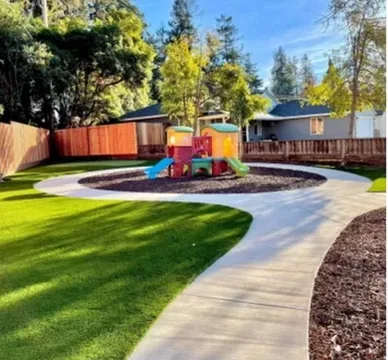
How we approach it
Plants picked for this climate, not a catalog
Orange County runs dry summers and a short wet winter, and most of the county sits on clay that holds water at the root ball long after the surface looks dry. We plant to that: drought-tolerant structure with the thirsty material grouped on its own valve so it can be watered separately instead of drowning everything else.
Beds shaped before anything is planted
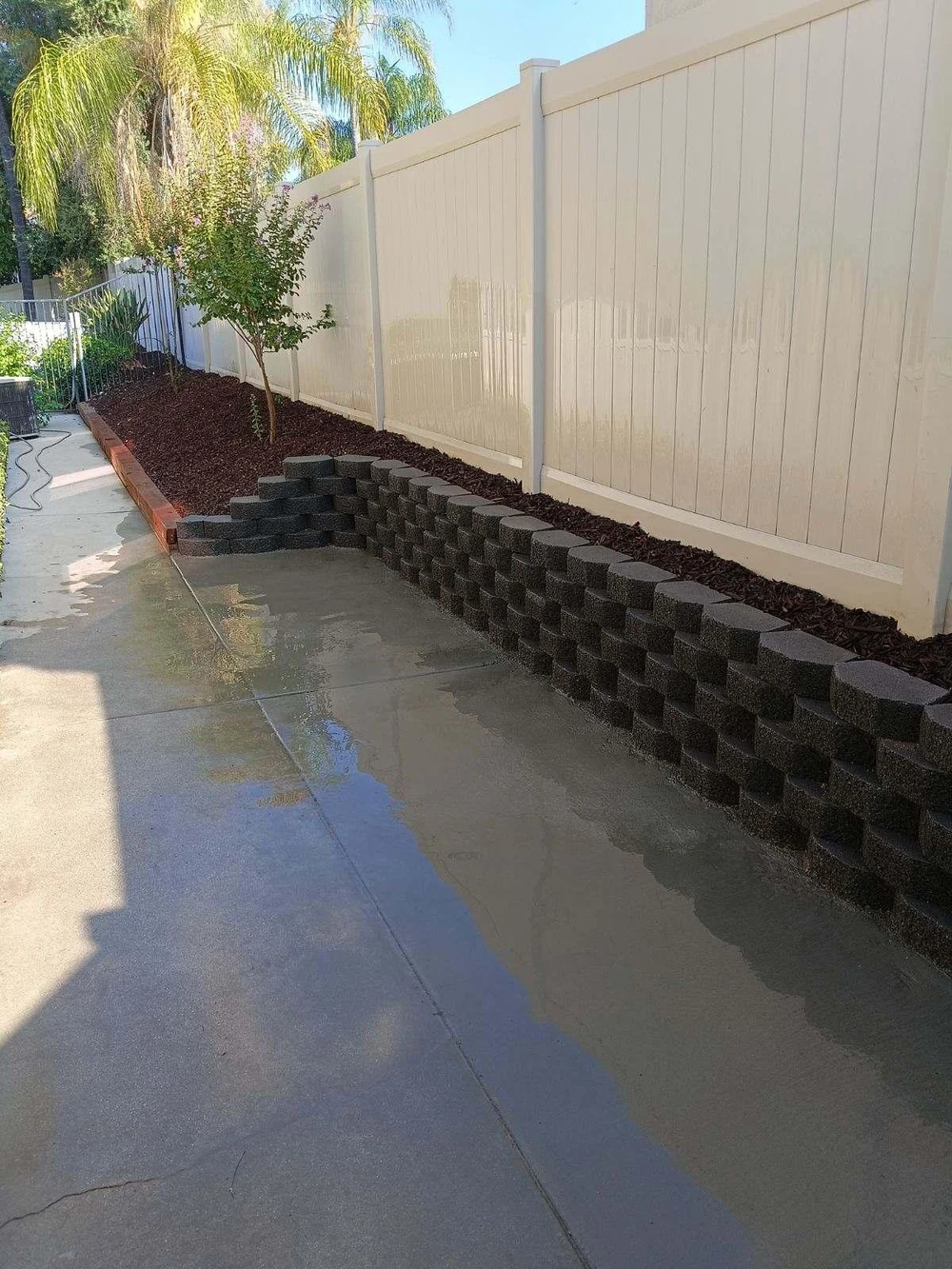
Grade first, then edging, then soil amendment, then plants. Beds get a real edge, either steel, concrete or a masonry curb, so mulch stays in the bed and turf stays out of it. Cutting a clean line once is cheaper than re-cutting it every spring.
Irrigation that matches the planting
Drip for beds, rotors or spray only where there is real lawn, and separate valves for separate water needs. We check pressure at the point of connection before designing the zones, because a system designed for pressure the house does not have will never cover evenly.
The detail
What goes in
Trees, shrubs, perennials and ground cover; soil prep and amendment; steel, concrete or masonry edging; bark or rock mulch; drip and spray irrigation; valves, controllers and rain sensors; sod or seed where a real lawn is wanted.
What we look at first
Where water sits after a heavy rain, how much sun each part of the yard gets in July, what the existing irrigation actually covers, and whether tree roots or a shallow utility will limit what can be dug.
What the ground here actually does
Most of inland Orange County sits on clay-heavy soil that swells when it is wet and shrinks hard when it dries. That matters more for planting than people expect: a hole dug in dry clay in July has walls like a plant pot, and roots will circle inside it rather than push out into the surrounding soil. We break the sides of the pit, amend the backfill rather than filling with pure compost, and set the crown slightly proud so the plant does not sit in a sump. Closer to the coast the soil turns sandier and drains fast, which flips the problem: water and nutrients run straight through, so the amendment and the irrigation schedule both change.
Sun exposure decides the rest of it. A south or west-facing wall radiates heat into the evening through summer, and plants that are happy ten feet away will scorch against it. We note what gets full afternoon sun in July, not what looks sunny in March.
What it costs to get wrong
The expensive planting mistakes are not the plants. They are the irrigation designed at the wrong pressure, the bed with no edge that has to be re-cut every year, and the tree planted three feet from a slab that lifts the concrete in a decade. Replacing a dead shrub is cheap. Replacing a driveway a ficus pushed up is not.
The other one is planting before drainage. If a bed sits where water collects, the plants in it will drown slowly and you will replace them twice before anyone works out the actual problem. We would rather spend the first day of the job with a shovel and a level than sell you a planting plan that is going to fail.
Where we do this work
We take landscaping jobs across Orange County, including Anaheim · Irvine · Huntington Beach · Mission Viejo · Fullerton, and into Los Angeles County and San Bernardino County. The full list is on the service areas page.
Often booked alongside:
Call (909) 567-5653, see the gallery, or tell us what you are picturing.
What the work looks like on site
Day one is rarely planting. It is clearing whatever is there, checking the grade against where water needs to go, and marking bed lines with paint so you can see the shapes at full size and change them while changing them is free. Once the lines are agreed, edging goes in, because edging installed after planting means working around plants and cutting a compromised line.
Soil comes next. We amend and till the beds rather than dropping plants into unimproved clay, and on sandy coastal soil the amendment is doing a different job, holding water rather than opening the structure up. Irrigation is trenched and the heads or emitters are set before mulch. Plants go in from largest to smallest, trees and structural shrubs first so the layout can be adjusted before the smaller material commits the composition.
The last day is mulch, a full irrigation test zone by zone, controller programming, and a walk with you. You get the plant list and watering schedule in writing.
After we finish
We walk the finished job with you before the final invoice rather than after it. Anything on the punch list gets cleared while the crew and the materials are still here, which is the cheapest and fastest time to deal with it.
You get whatever documentation the work generates: the plant list and irrigation schedule on a planting job, product details and warranty paperwork on turf, permit and inspection records where the work was permitted, and the specification of what went in the ground so a future contractor is not guessing.
Workmanship is warranted, and manufacturer warranties on materials such as turf and pavers pass to you. If something is not right, call us. We are a small local operation and our name is on work all over this county, which is a stronger incentive than any warranty document.
Questions about landscaping
Will you work with plants I already have?
Yes. If a tree or a mature shrub is healthy and in a workable spot we design around it. Anything we move gets root-pruned ahead of time where the schedule allows, and we will tell you honestly if something is unlikely to survive the move.
How much water will the new planting need?
Less than a conventional lawn in almost every case, and the design is what decides it. Grouping plants by water need and running drip in the beds is the single biggest difference. We set the controller before we leave and walk you through the schedule.
Do you handle ongoing maintenance?
Our work is installation. We set the irrigation schedule, mulch the beds and hand over a plant list so whoever maintains it knows what is in the ground and how it should be pruned.
When is the best time to plant?
Fall and early spring are easiest on new plants here, because the roots get established before summer heat. We plant year round, and in summer we water in more heavily for the first few weeks.
Can you fix an irrigation system that already exists?
Often, yes. We test the zones, find the breaks and the heads that are misted or blocked, and tell you whether repairing is sensible or whether the pipe is old enough that replacing the run is the better spend.
What about drainage before planting?
If water sits in the yard we deal with that first. Planting into a spot that holds water kills the plant and wastes the install.
Can you plant to screen a neighbor’s view?
Yes, and it is one of the most common requests. The honest constraint is time: a fast screen usually means a hedge that needs regular trimming, and a low-maintenance screen usually takes a few years to close up. We will show you both options and what each looks like at year one and year five.
What happens to my existing irrigation?
We test it before we design anything. Zones that work get kept and re-headed where the planting changes; zones that leak or were never covering properly get replaced. Capping a line badly is a slow leak nobody finds for a year, so we cap properly at the main rather than crimping the pipe.
Do you remove trees?
Small trees and stumps, yes, as part of clearing. Large removals and anything near power lines belong with a licensed arborist and we will tell you when that is the case rather than attempting it.
Tell us what you are picturing
We will come out, walk the property with you and put a real scope together. No pressure attached to the visit.
Anaheim, CA. Locally owned. Financing available.
Have us walk it
Leave the town and what you are picturing. We call back and come out.