Replacing the Original Tract Concrete on Brea Clay
Down on the flat in south Brea, a lot of the concrete around the houses is the concrete the tract was built with. The driveway, the front walk, a back patio poured at the same time as the house. Much of it has reached the end of its life, and people usually call us once a crack has turned into a trip edge or a panel has tipped toward the house. Replacing it is straightforward work. Replacing it so the new slab does not go the same way takes more thought, and most of that thought is about the ground underneath.
Why the first slab on the flat gives out
The ground in south Brea is flat clay, and most of what goes wrong with old concrete starts there. It swells when it takes on water and shrinks as it dries out, and it does that every year. A slab poured on top rides that movement for decades. The concrete is rigid and the ground under it is not, so eventually something gives, and it gives at the weakest point: a corner, a spot where a tree root has pushed up, a place where the base was thin.
Age plays its part too. The original work on a mid-century tract was done quickly, to the standard of its time, and the base underneath is often less than the use deserves. A driveway that was fine for one car decades ago now carries two heavier ones every day.
Then there is water. On a flat lot with very little fall, water from the roof and the lawn has fewer places to go, so it sits along the slab edges and soaks the clay unevenly. One side of a patio gets wetter than the other, swells more, and lifts. That is usually the heave you are looking at.
Reading the cracks before anything gets broken out
Not every crack means the same thing, so we look before we talk about removal. A fine crack that has stayed tight and level is usually the concrete doing what concrete does as it shrinks. It is ugly, and it is not an emergency.
A crack where one side sits higher than the other is different. That is movement, and it is the one that catches a toe on the front walk. Panels that have tipped toward the house matter even more, because now the slab is steering water at the foundation instead of away from it.
We also look at where the damage sits. Heave clustered along one edge points at water. Damage around a tree points at roots. A driveway that has broken up where the wheels run suggests a base that was never deep enough for the load. Each of those gets a different fix, and pouring new concrete in the same place, the same way, repeats the problem.
This is part of why we walk the whole lot. The cause of a cracked patio is often a downspout or a planting bed at the other end of the yard.
Some slabs are worth keeping
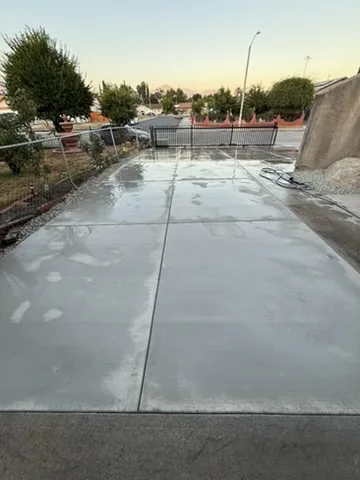
We do not assume everything has to come out. A slab with tight, level cracks, sound edges and a fall that still sends water away from the house can often stay, and there is no reason to pay for demolition you do not need.
Where we keep a slab, the question becomes how the new work meets it. Concrete never color-matches exactly, and old concrete has weathered for years. A new panel poured tight against an old one will look patched however carefully it is done. So where an exact match is not possible, we suggest a deliberate transition detail instead of a near miss: a paver band, a change of finish, a planting strip between the two. Our hardscaping work in Brea leans on that kind of detail a lot on older lots.
Sometimes the honest answer is split. The driveway has moved and has to go, the back patio is fine, and the front walk sits somewhere in between. We will tell you which is which, and we would rather tell you to leave something alone than add it to the scope because it is convenient.
Tear-out, then the part nobody sees
When a slab does come out, demolition is the loud part and the quick part. The concrete gets broken up and hauled away, and then the real work starts on what is underneath.
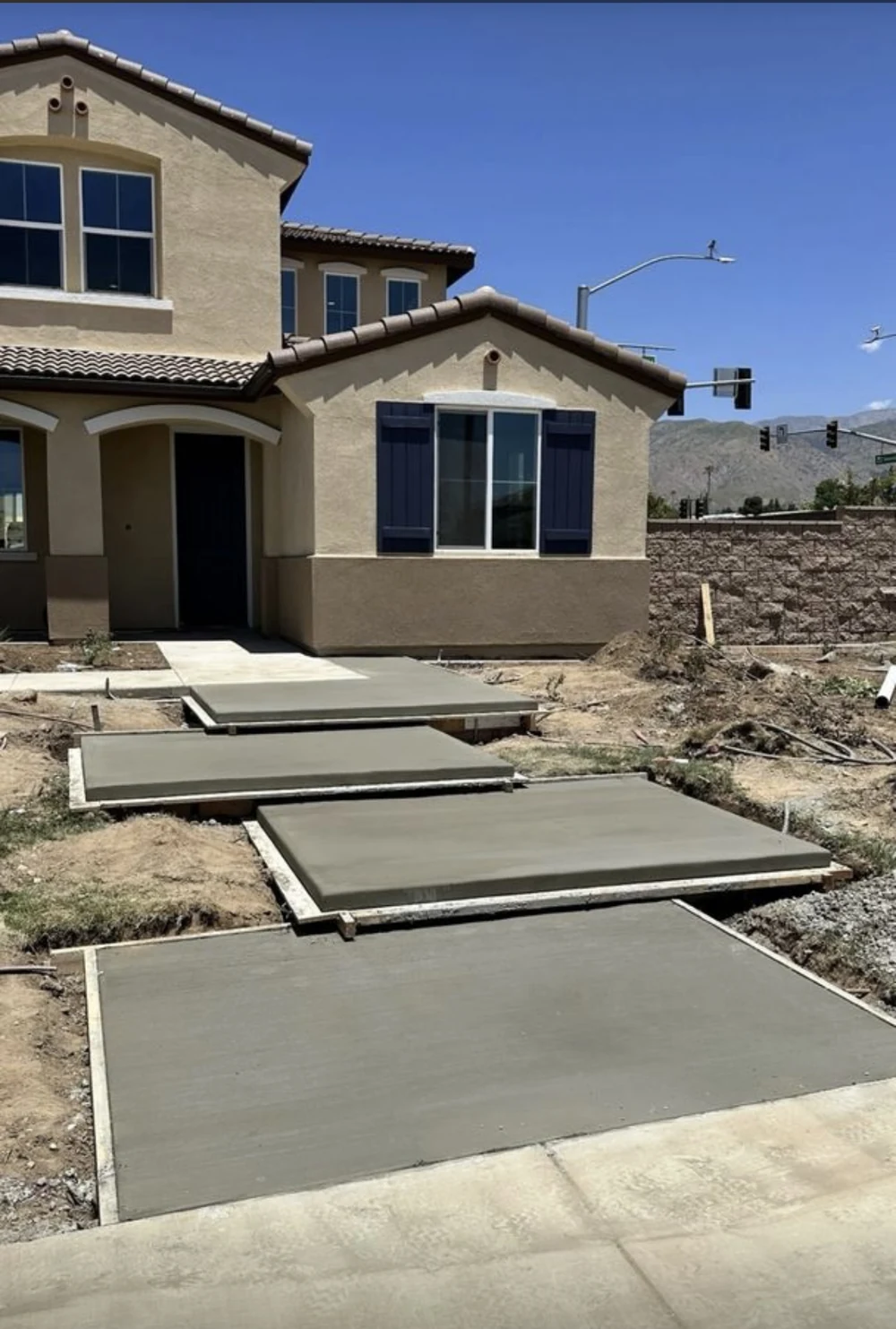
A driveway carries cars, a walk carries people, and the base under each has to be built for that load. We dig to the depth the use requires, which on an old tract lot usually means going below whatever the original crew left, and we remove soft or root-filled material rather than pouring over it. The base goes back in layers and gets compacted layer by layer instead of being dumped in one go. Nobody sees that layer once the pour is done, but it decides whether the slab stays flat.
Then there are control joints, which get cut into the finished slab. Concrete is going to crack somewhere. The joints give it a straight, planned place to do that, so the crack runs where you expect it instead of wandering across the middle of a panel. Their layout gets set to the shape of the slab, not by habit.
All of this is named in the written scope, so the base depth is on paper before anyone breaks ground.
Drainage goes in before the new pour
Building a surface over a drainage problem moves the puddle, it does not remove it. On a flat clay lot that is doubly true, because the slab itself is part of the drainage. It either sends water somewhere useful or it traps it.
So the order matters. Demolition, grading and drainage first. Then the new flatwork. Then planting, turf and lighting last, so nothing finished gets driven over. With the old slab gone the ground is open, and that is the cheapest moment you will ever have to set a proper fall away from the house, run a drain line under where the walk will go, or lay conduit for lights you might add later. Laying drain pipe and conduit before the pour costs far less than cutting a new slab open to add them later.
Before we set any of that, we work out where water currently goes in a heavy December and where it needs to go instead. On a lot where the old patio tipped toward the house, that is often the whole point of the job. And if the yard around the new concrete is heading toward artificial turf, the base under it has to agree with the slab about where the water runs.
If the concrete around your house is original and starting to move, we are glad to come and look at it. We work across Brea regularly. Call (909) 567-5653 and we will walk the property with you, or tell us what you are picturing. Finished flatwork is in the gallery.
Questions about old concrete on clay
Can new concrete go right over the old slab?
We rarely recommend it. If the old slab is moving, a new layer on top moves with it and the cracks come back up through the fresh surface. It also raises the level against doors, steps and the house. Where the base is the problem, the old concrete has to come out so the base can be fixed.
Will the new concrete match the section that stays?
Not exactly, and anyone promising that is guessing. Concrete never color-matches exactly, and old concrete has weathered for years. Where a close match is not possible we suggest a deliberate transition detail, such as a paver band or a planting strip, instead of a near miss. It reads as intentional, which is the point.
Can I replace the driveway now and the patio later?
Yes, that is common and often sensible. We will tell you the order the phases have to run in, because some things must happen while the ground is open. If a drain line or conduit needs to cross under the driveway, it goes in before that pour, even if the patio waits a year.
Concrete lifting or cracking by the house?
We walk the property, look at the slab and where the water goes, and put a written scope together. We do not charge for that visit, and nothing rides on it.